A lifetime spent chasing the ghosts of Napoleonic Europe leads one of history's great biographers to a quiet Italian village—and to himself.
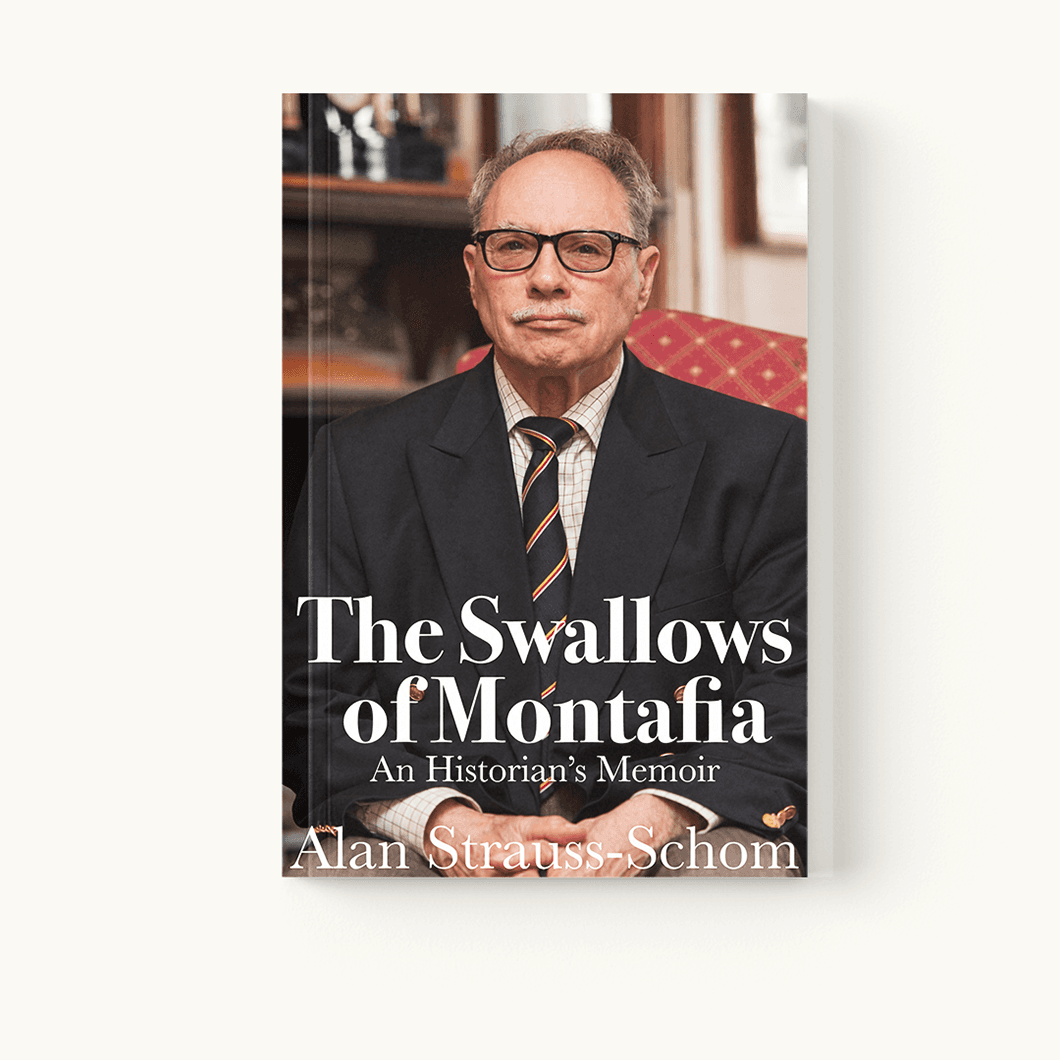
New York, NY — September 8, 2026 — Casa Carlini is proud to announce the September 22 release of The Swallows of Montafia: An Historian's Memoirs, the first personal work from celebrated historian and biographer Alan Strauss-Schom. The book will be published under Vita, Casa Carlini's imprint dedicated to biography and memoir. After decades spent illuminating the lives of Napoleon Bonaparte, Napoleon III, and the great political dramas of modern Europe, Strauss-Schom now turns his rigorous, discerning eye on his own story.
The Swallows of Montafia traces the arc of a scholar's life: long hours in French archives and reading rooms along the Seine, the solitude of borrowed apartments and drafty hotel rooms, and the quiet exhilaration of chasing hidden truths through the historical record. The memoir follows that journey to its unexpected final chapter—a small village in Piedmont, Italy, where swallows circle over red-tiled rooftops with the turning of the seasons, and where a man who spent his career among the dead finally makes peace with the present.
Part memoir, part meditation, the book weaves personal reflection with the rhythms of rural Italian life to explore memory, exile, solitude, and belonging. Readers familiar with Strauss-Schom's meticulous, elegant prose from works like Napoleon Bonaparte: A Biography and The Shadow Emperor will find that same care turned toward something more intimate: the question of what it means to come home after a lifetime spent elsewhere, in the past.
Alan Strauss-Schom is a distinguished historian and biographer whose work has shaped our understanding of the political and military currents of modern Europe. His major titles include Trafalgar: Countdown to Battle, One Hundred Days: Napoleon's Road to Waterloo, and Napoleon Bonaparte: A Biography—a finalist for the Los Angeles Times Book Prize. His most recent biography, The Shadow Emperor: A Biography of Napoleon III, further cemented his reputation for archival rigor and narrative grace. Strauss-Schom has been nominated for both the Pulitzer Prize and the National Book Award, is an elected Fellow of the Royal Historical Society, and is the founder and first president of the French Colonial Historical Society, where he also established the scholarly journal French Colonial Studies.